












ALTIORA
Find a campus
Learning through sensory materials, picture books and structures

Curated Learning Experience

Through experiences with English, children practise thinking as they listen, understand, connect, and express. Activities in their first language allow them to carry out these processes more deeply. Cognitive experiences that invite children to think about thinking develop the minds of gifted learners.

A gallery displaying a variety of artworks
  • Listening Acquisition

    Listening education that helps children intuitively discover meaning through sounds and context

    It develops the ability to listen and infer, understand situations, and follow stories.

  • Speaking Acquisition

    Education that connects meaning with meaning and turns it into speech

    Connections within networks of meaning expand thinking and enrich expression.

  • OneBite International_Vocabulary & Speaking

    Education that connects mental imagery of words and meanings with speaking fluency

    Children use their senses together to take in language and organize it in new ways.

  • Gifted Language Schema: Thinking Habits, Stage 1

    Education that refines children’s ability to listen to and understand their first language

    It connects focused listening with mental imagery, remembering, and structuring what is heard.

An educational design that connects good thinking habits with the process of acquiring English

  • SoundTree Core_Phonics Acquisition

    Scientific phonics education for balanced development in listening, speaking, reading, and writing

    Children discover principles through experience and apply them in a recurring cycle, gaining insight into the sound and writing systems of English.

  • FluenTree_Reading Acquisition

    Education that embodies meaning through sounds and images, building the foundation for fluent reading and speaking

    Children visualize an entire extended story, remember it in multiple dimensions, and tell it.

  • Habitus Lv. 1–2

    Foundational literacy education that uses observation, discrimination, and connection to discover the patterns and meanings of written language

    Children compare and connect sounds and letters, images and meanings, observe recurring patterns, and develop the ability to distinguish and discover relationships.

  • PYP Basic

    Thinking-based speaking education that organizes information into speech

    Children observe and discover relationships, then connect information in a logical sequence to remember it.

  • Gifted Language Schema: Thinking Habits, Stage 2

    Education that helps children reflect on the meanings of Korean words, understand them precisely, and use them

    Conceptualizing and categorizing words expands vocabulary-based thinking.

  • Habitus Lv. 3–4

    Thinking-based literacy education that enables children to organize meaning in texts through analysis, classification, and sequencing

    Children classify and sequence information to understand a text’s structure. They develop the ability to organize and reconstruct content within their own language system.

The noblest and most beautiful things for children

Education that treasures children’s present most of all

  • Brain Teaser

    Education that internalizes the ways gifted learners think

    Play and challenges develop linguistic, numerical, and spatial cognition.

  • CogLog

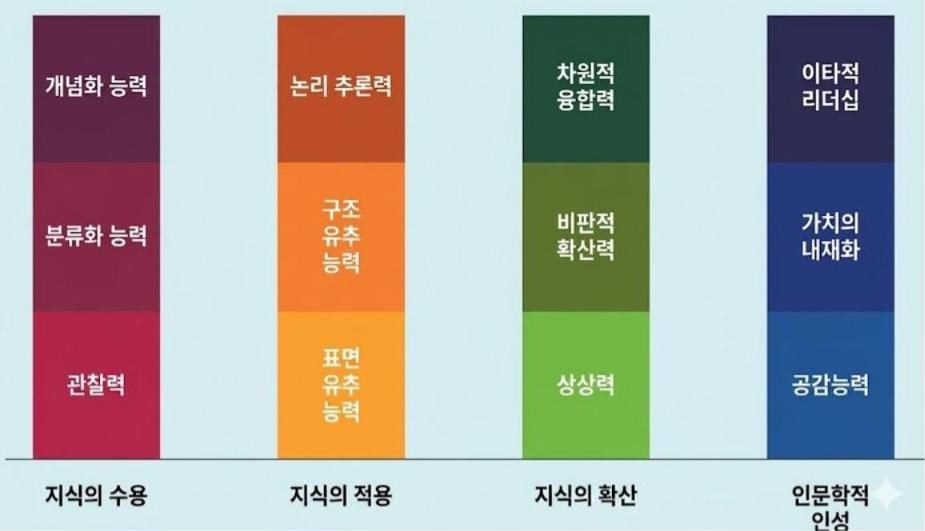
    Education about how information is taken in, stored, and used

    Based on stories and big ideas, children draw, make, and design by hand while thinking about thinking.

  • Create703

    Integrated STEAM education

    Within a larger story context, children combine mathematical and scientific, coding, and design thinking to solve problems.

Building a foundation for thinking and strengthening communication

  • Habitus Lv. 5–6

    Productive literacy education that expands discovered principles into new forms of expression

    Children reorganize and extend through writing the information they have taken in through reading.

  • PYP Level 1

    Thinking-based speaking education that connects questioning, analysis, connection, and structuring

    Children systematically understand and express information about a topic.

  • Vocapedia 1000

    Vocabulary development that moves between understanding and use

    Children deepen and refine word meanings, then use them in speech and writing.

  • Gifted Language Schema: Thinking Habits, Stage 3

    Education that develops structural understanding and expression of sentences and narratives

    It builds the habit of structuring information from the very first stage of input.

EXPECT THE GREATEST

What gifted English education means

Rather than selecting exceptional children for education, it realizes the unlimited potential within every child. It sets clear educational goals for each subject and develops distinctive ways of thinking to achieve them.
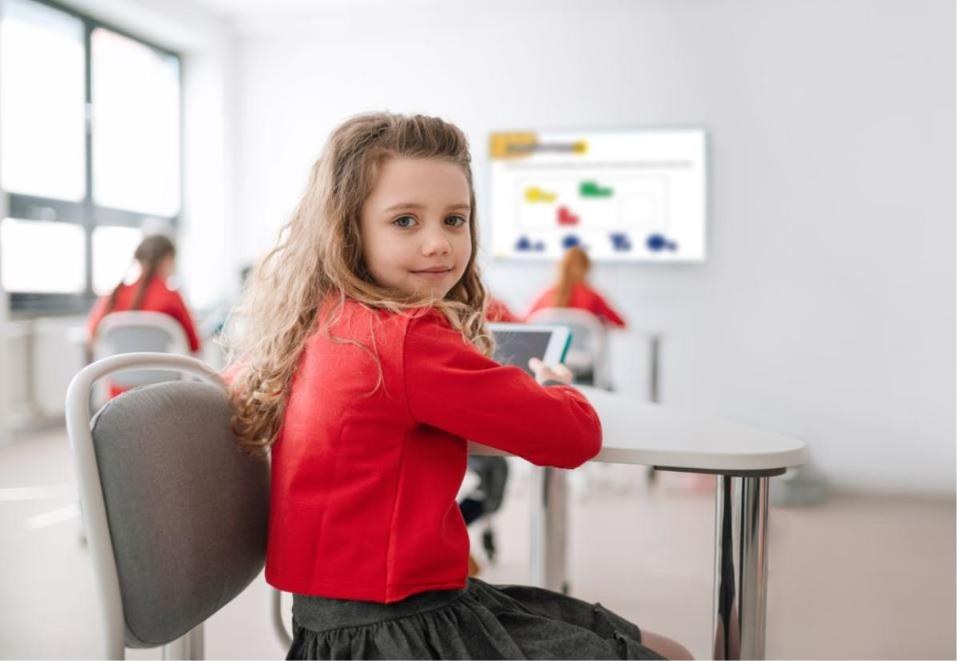

An interdisciplinary curriculum

Through an interdisciplinary curriculum, children in a decisive period of learning experience more than English education. This truly integrated education develops the thinking that underpins cognition and communication, alongside creative problem-solving.

531 Fun

Across ALTIORA’s three-year curriculum, children experience 531 books. The journey develops not only English acquisition but also structured thinking and creativity. Each book becomes a new adventure, making learning itself a source of joy.

A child turning around in a classroom

In every subject, a different thinking skill grows

From listening to speaking, vocabulary to stories, and sounds to letters, Explore eleven articles about the strengths each program builds within children.

Program

English Listening and Inference: PlayTree

A listening development program for discovering meaning through sound and context

Children’s language development begins with listening. Children first hear sounds, observe expressions and gestures, and sense a situation, realizing, “Oh, that’s what it means.” Just as their first language grows in this way, ALTIORA’s PlayTree begins with experiences in which children listen sufficiently, respond joyfully, discover meaning for themselves, and connect language with the world at their own developmental pace, rather than first learning English as rules or vocabulary.

Program

ALTIORA MOVEMENT

As children’s bodies awaken, their capacity to learn grows too

The World Health Organization (WHO) explains that infancy and early childhood are periods of rapid physical and cognitive development, during which a balance of physical activity, sleep, and sedentary behavior matters. WHO guidelines for children under 5 likewise explain the importance of sufficient daily activity, good rest, and less excessive sitting or screen exposure for young children’s health and well-being.

Program

Learning How to Learn: CogLog

The ability to remember and use knowledge and expand it into new thinking

Every day, children experience new things, learn new words, gain indirect experiences through stories, and build knowledge by observing and enjoying things that interest them. Yet what matters in these learning experiences is not simply knowing or having tried a great deal. What matters is how children organize what they know, retrieve it when needed, and use it to create new thoughts.

Program

Meaning-Connecting English Speaking: MighTree

A speaking development program that adds meaning to meaning and expands thought into speech

Children begin speaking when they connect what they have seen, heard, and felt with the world. Let us reconstruct how a first language is acquired. You will remember the moment your child first said “Mom.” You probably never set aside time to drill the pronunciation of that word. Your child heard it countless times, naturally experienced the situations and feelings it connects with, and one day spoke it themselves. A little later comes “Mom, water!” Two words have become connected through meaning. Later still comes “Mom, I want some water.” Familiar words form an increasingly rich web of meaning.

Program

Discovering and Explaining Independently: Brain Teaser

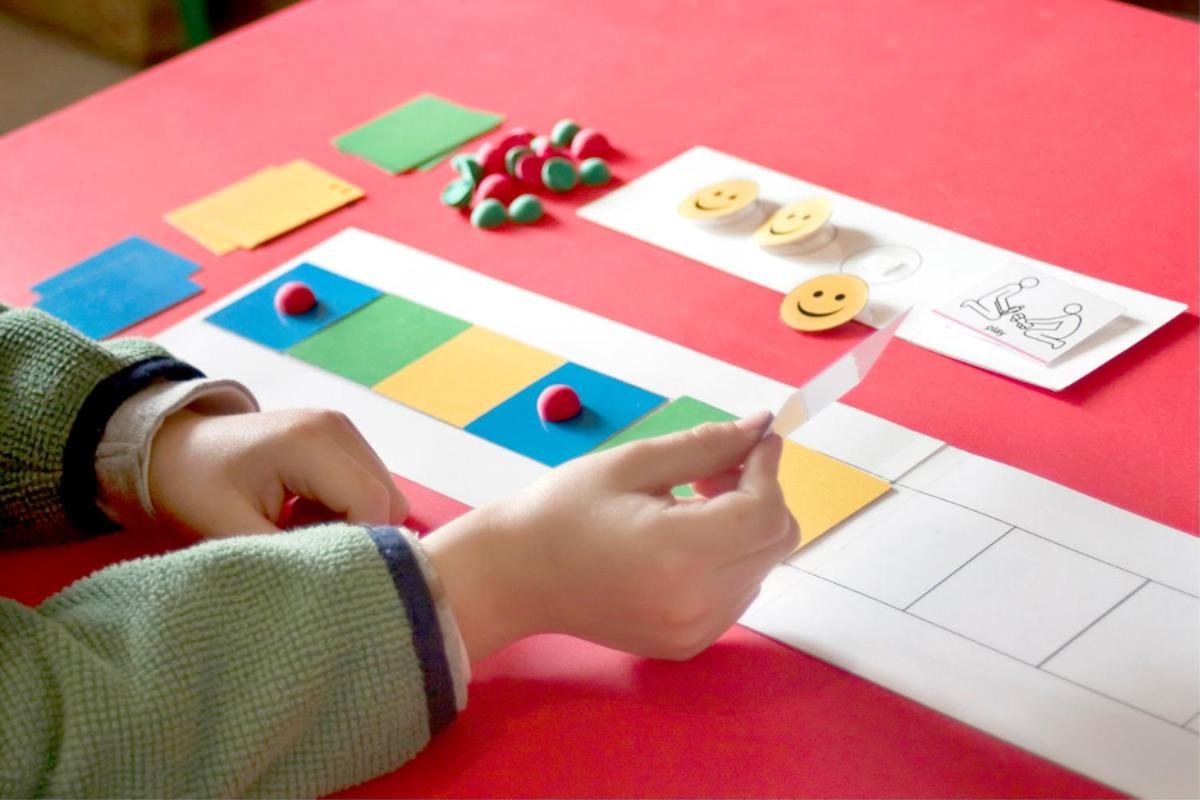
What truly matters is the thinking process

Brain Teaser is an inquiry-based program that develops thinking by encouraging children to discover patterns and relationships hidden in pictures, shapes, numbers, and space for themselves. Children first examine the information carefully. They observe shape and color, position and direction, changes in sequence, and common features, considering what patterns a problem contains. At times, they manipulate materials directly by hand to explore changes in form and space, connecting visual information with bodily experience. They then solve the problem using the principles they have discovered and explain the process in their own words.

Program

Habitus: Strengthening the Roots of Reading and Writing

The beginning of multidimensional literacy that resonates with children’s growth

Children’s reading and writing do not begin with mechanically sounding out letters or filling pages with tightly written alphabets. Long before that, children are already “reading” the world around them in their own ways by observing information in pictures, understanding scenes in context, and matching sounds with visual images. The same is true of writing. Delicate experiences of strengthening the small finger muscles that hold a pencil, controlling the direction of a line, and discovering patterns in shapes come together to form a solid foundation for literacy. All these internal resources for reading and writing, formed before formal learning of written language, are called Early Literacy.

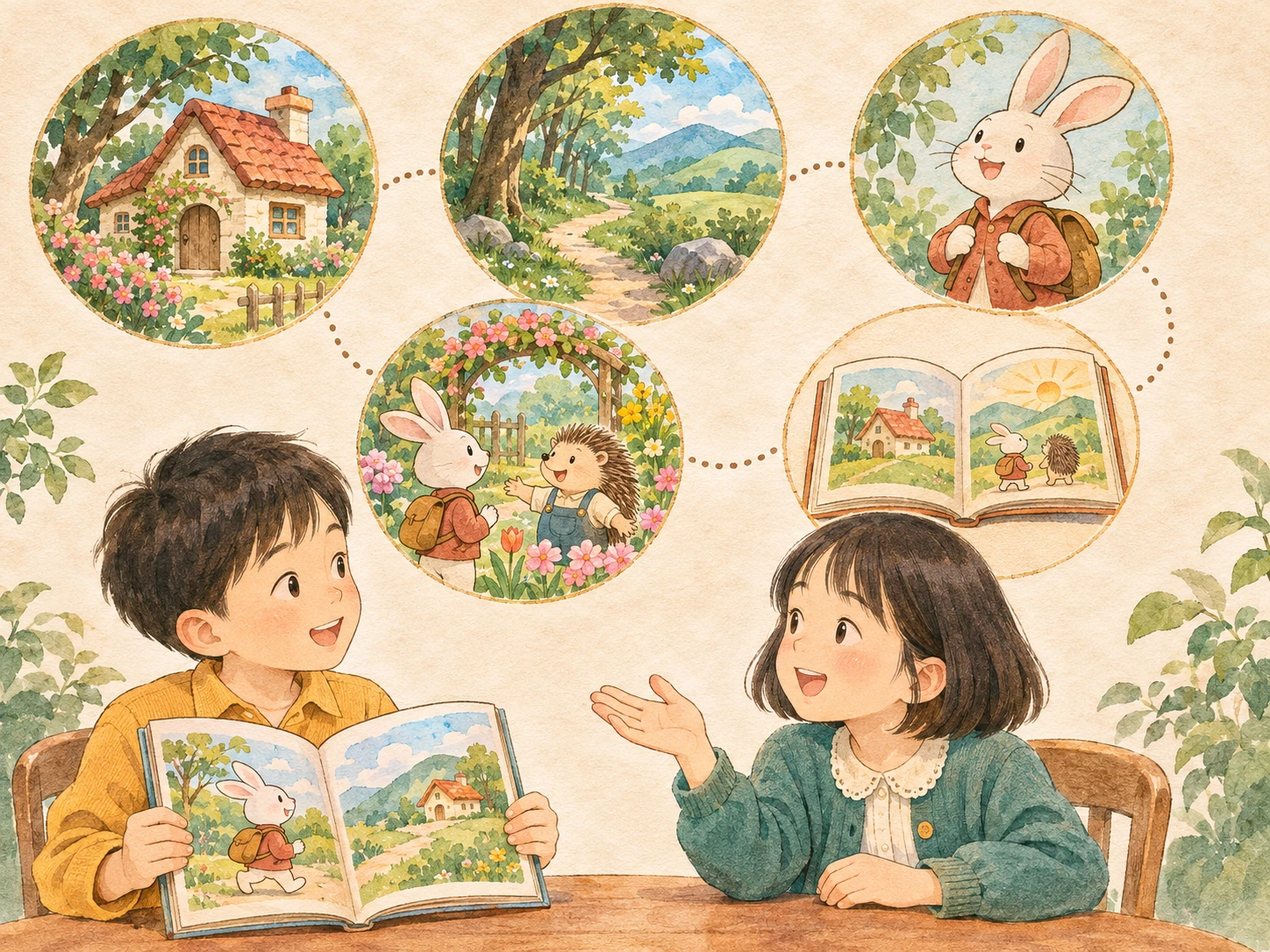
Illustrative image · Two children connecting the setting, characters and events of a picture book
Foundations & further learning

What Is Multidimensional Reading?

Listening to, looking at, speaking, and reading books

Once children have learned to read written symbols to a certain extent, they commonly move readily into reading books with their eyes and understanding them. After learning English phonics, they move straight into activities focused primarily on Reading Comprehension. But without fluent reading or speaking at the sentence level, they must expend considerable energy decoding individual words and cannot easily follow the overall flow of meaning. A lack of fluent sentence-level reading ability also helps explain why many children experience frustration with grade 3 reading, where the content of books demands a sudden cognitive leap.

Admissions enquiry

Leave your enquiry and we will contact you after reviewing it.

Preferred campus
Select a region
Preferred campus
Year of birth
How did you first hear about ALTIORA? Optional
Find a campus

Explore your child’s behavior

30 questions · About 3 minutes

Explore everyday behavior patterns and five behavioral characteristics in an individual profile.

Start the questionnaireopens in a new tab