

Children’s reading and writing do not begin with mechanically sounding out letters or filling pages with tightly written alphabets. Long before that, children are already “reading” the world around them in their own ways by observing information in pictures, understanding scenes in context, and matching sounds with visual images. The same is true of writing. Delicate experiences of strengthening the small finger muscles that hold a pencil, controlling the direction of a line, and discovering patterns in shapes come together to form a solid foundation for literacy. All these internal resources for reading and writing, formed before formal learning of written language, are called Early Literacy.
ALTIORA’s Habitus is an Early Literacy program precisely designed to align with language development in early childhood. Habitus designs the ways children receive, understand, and express the world’s meaning through language and sound, pictures and stories, symbols and letters, according to their developmental stages.
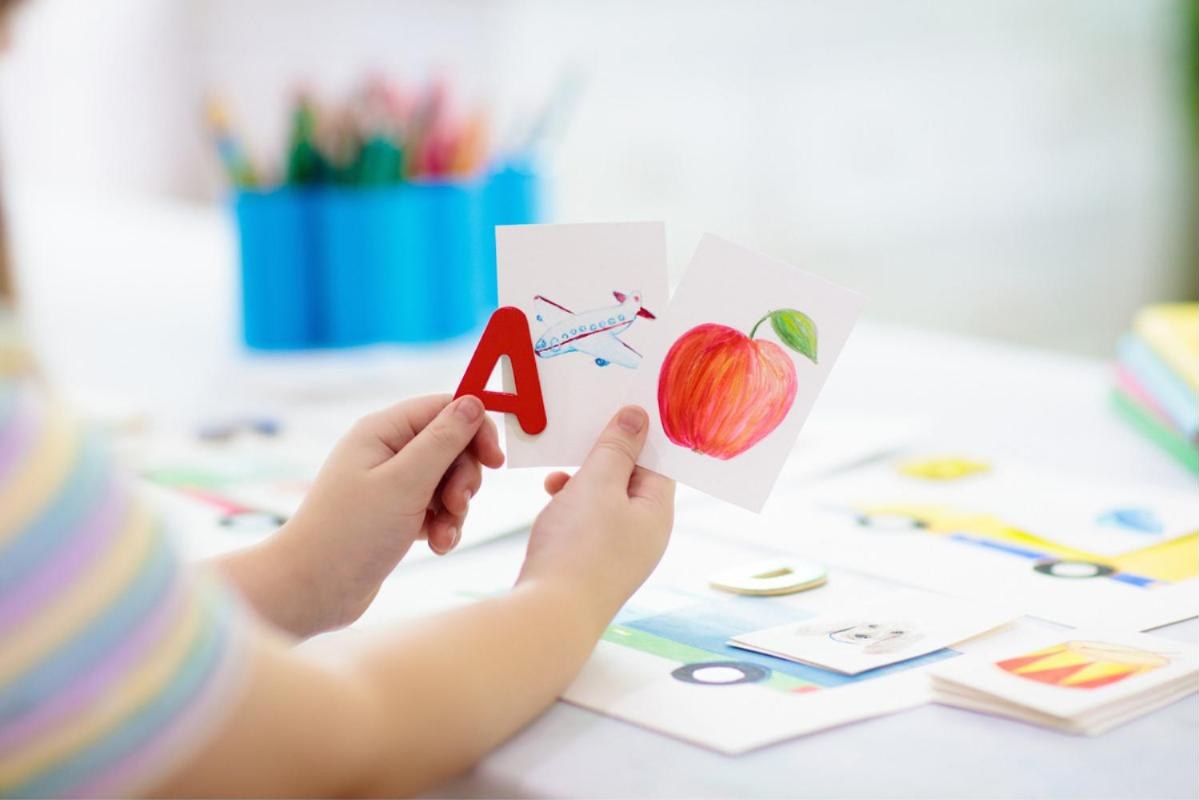
Children first observe colors, numbers, and shapes through pictures or symbols, moving on to comparison and contrast, understanding sequences, and discovering patterns. They then find and infer meaning from pictured scenes. In this process, they connect pictures with sounds and words with experiences. They also follow scenes and events to understand content and identify key points. After these early reading experiences, they eventually learn and read letters, progressing from words to sentences. This is how reading first begins and grows.
Let us also consider writing. Its most basic foundation is physical readiness. Strength and control in the fingers, wrists, and arms must develop before a child can hold a pencil, draw lines, and trace letters (fine motor development). Children also need to connect what they see with hand movements. Visual information and hand movements are coordinated as they trace lines or draw shapes (hand–eye coordination). Experiencing vertical, horizontal, curved, diagonal, and circular lines lets children practice the basic forms that make up letters (line drawing). Tracing circles, triangles, and squares lays the foundation for forming letters (shape drawing). Experiencing up and down, left and right, beginning and end teaches the basic order of writing (directional awareness). Drawing inside squares and aligning with lines develops understanding of the position, size, and spacing of letters and pictures (spatial awareness). Finally, letter writing begins through dotted-line tracing, writing over letters, and experiencing stroke order (letter tracing).
Habitus captures this entire beginning and development of reading and writing in an extensive series of 36 books. The term “Habitus,” named by French sociologist Pierre Bourdieu, carries the meaning of speech, actions, and ways of thinking becoming internalized through accumulated experience until they are as natural as breathing, a habit and a culture of living. It aptly reflects ALTIORA’s view of reading and writing: not temporary skills completed through short-term instruction, but cognitive habits that take root gradually and firmly in children’s lives as beautiful experiences of seeing, listening, touching, thinking, and expressing recur in a spiral.
Habitus stands out in another dimension because it draws its subject matter and themes from ALTIORA’s other programs for acquiring English listening and speaking. All English experiences at ALTIORA, listening, speaking, reading, and writing, therefore occur within organically connected contexts. Habitus also aligns with ALTIORA’s cognitive activity programs Brain Teaser and CogLog in the cognitive abilities it develops, creating tremendous synergy in educational outcomes.
Following this intricate and extensive pathway, which resonates perfectly with children’s growth, we discover reading and writing growing in healthy, joyful ways. We also encounter wondrous moments in which that growth leads to quite advanced abilities.