
Every day, children experience new things, learn new words, gain indirect experiences through stories, and build knowledge by observing and enjoying things that interest them. Yet what matters in these learning experiences is not simply knowing or having tried a great deal. What matters is how children organize what they know, retrieve it when needed, and use it to create new thoughts.
CogLog is designed to let children naturally experience cognitive strategies for storing knowledge well, using it effectively, and expanding it into broader thinking.
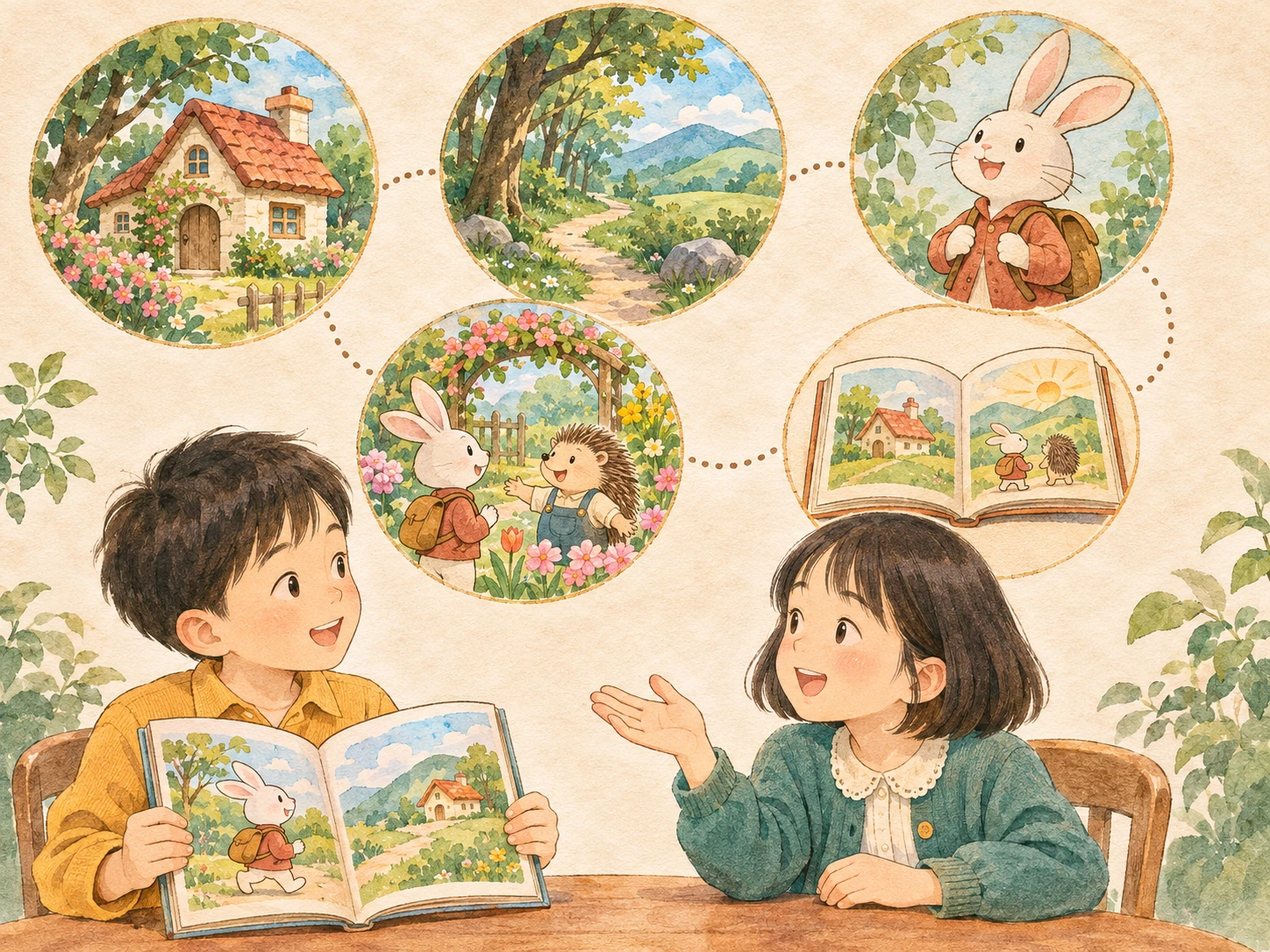
The starting point is a picture-book story. Through stories that are familiar and easy to immerse themselves in, children observe the situations characters encounter, discover problems, and solve them together, vividly experiencing cognitive activity. Another major feature is that all these cognitive activities take place through hands-on materials for drawing, making, and designing. Children learn by connecting abstract concepts and logic with activities they can touch and manipulate directly. Across ALTIORA’s 3-year curriculum, they experience 120 hands-on cognitive activities. Even the best education can have no effect if children feel burdened and uninterested; CogLog therefore offers a wealth of play and games that children can enjoy with interest.
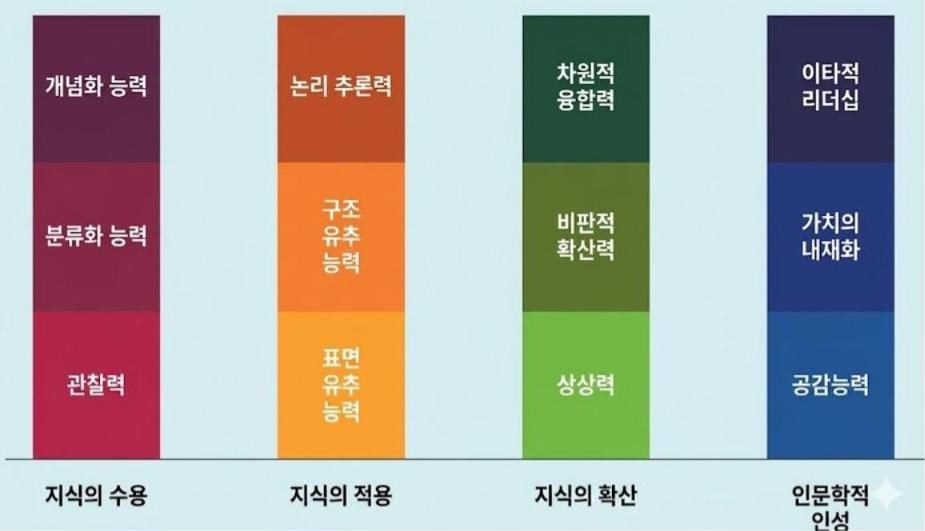
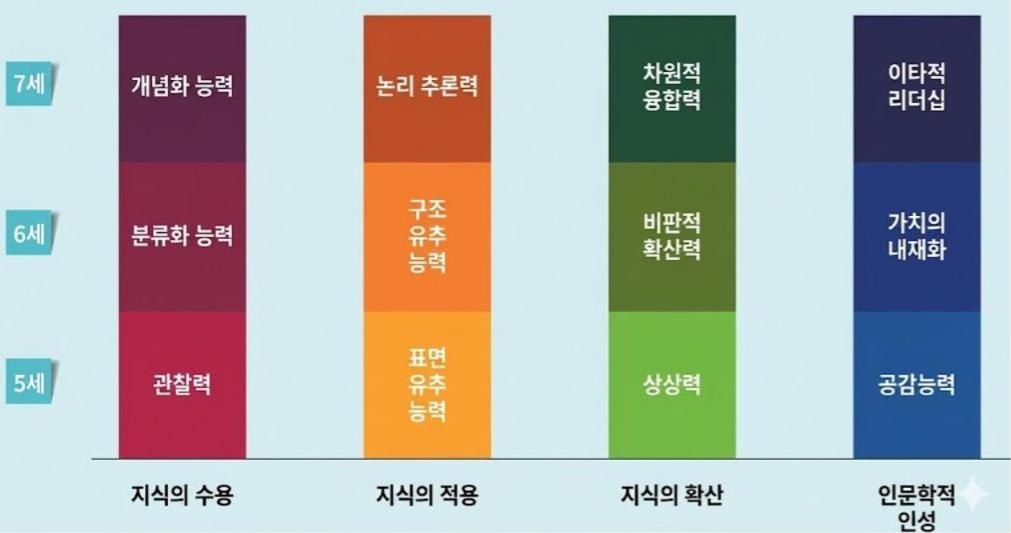
Looking more deeply, CogLog develops four core competencies needed by creatively gifted children: storing learned knowledge well (receiving knowledge), applying it appropriately (applying knowledge), extending it through new perspectives (expanding knowledge), and using it for worthwhile and ethical purposes (humanistic character). These four competencies lay a foundation for our children to grow into future leaders.
1. Receiving knowledge
The ability to observe the world closely, classify it, and understand it through concepts
Knowledge begins with looking carefully. Through stories and activities, children observe objects, scenes, characters, and situations, distinguish similarities and differences, and organize their experiences into concepts. Observation, classification, and conceptualization develop. Rather than simply looking at something, children consider what they see, what is similar, and what words could organize it.
2. Applying knowledge
The ability to connect what is already known with a new situation
Learned knowledge becomes truly one’s own when it can be used. In CogLog, children solve problems within stories, applying what they already know to new situations. They begin by finding surface similarities, gradually discover underlying structural relationships, and then think logically about why a particular result occurs. Surface analogy, structural analogy, and logical reasoning develop. Children experience a flow of thought such as, “This is like something I’ve seen before,” “It looks different, but the method is the same,” and “So that’s why this happened.”
3. Expanding knowledge
The ability to extend one idea more broadly and in new directions
Good thinking does not stop at a single correct answer. Based on situations in stories, children imagine new possibilities, consider different perspectives, and connect multiple ideas. Imagination, critical divergent thinking, and cross-dimensional integration develop. Children explore questions such as, “What if we changed it?”, “Is this really a good approach?”, and “What could we make by combining different ideas?” Creativity is not simply having many unusual thoughts. Creative thinking grows where well-received knowledge, ample experience making connections, and the ability to see things differently meet.
4. Humanistic character
The ability to use knowledge meaningfully and understand people and the world
The thinking skills CogLog seeks extend beyond detached problem-solving. Children consider story characters’ feelings, reflect on what situations mean, and think about how their own choices may affect others. Empathy, the internalization of values, and altruistic leadership develop. Beyond knowing a great deal, children are supported in becoming people who use knowledge responsibly, understand others, and consider shared values.
Through CogLog, which teaches how to learn about the world, ALTIORA children grow wiser and deeper every day.