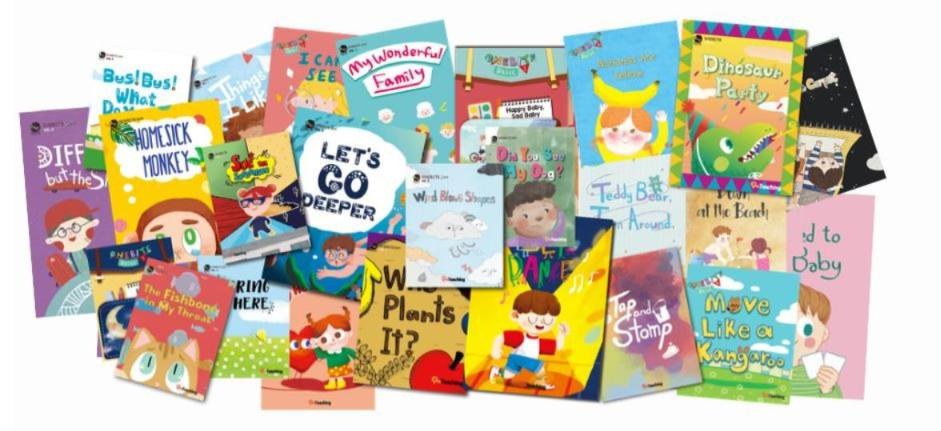


One word, one world
Think of the word “apple.” What comes to mind? Perhaps a red circle appears, or a fragrance from somewhere brushes past your nose. Some may hear the crunch of taking a bite; others may remember the hands of someone peeling an apple for them in childhood.
A single word comes alive so richly in our minds because it is more than information. A word is a small world in which color, sound, scent, emotion, story, and memory are bound together. This is where ALTIORA’s OneBite begins: not with memorizing words, but with building together the world contained within them.
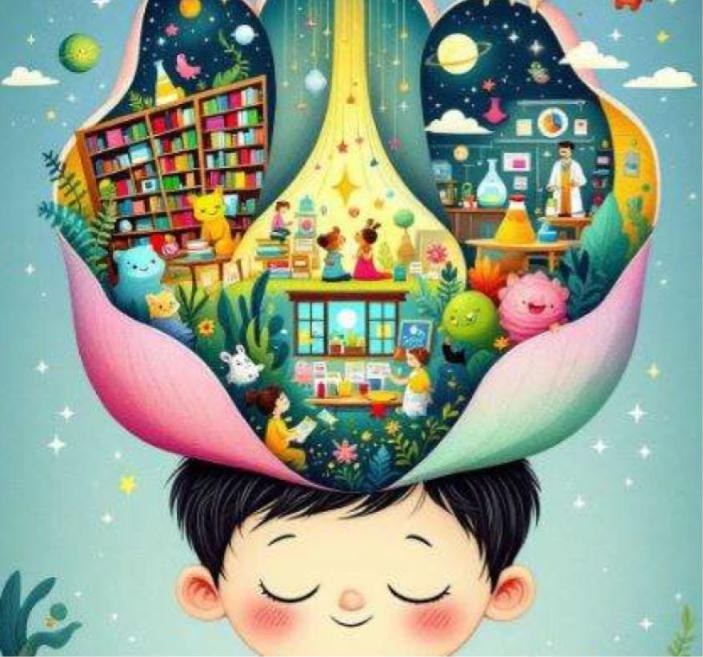
What does it mean to know a word?
One familiar sight in English education is the vocabulary flashcard: an English word on one side and its Korean meaning on the other. Children memorize the cards, take a test, and receive a score. Words learned this way quickly fade when learning ends. Unused words are forgotten, and new words fill the spaces they leave.
OneBite takes a step away from this familiar scene. We approach words differently because we define knowing a word differently.
Canadian cognitive psychologist Allan Paivio established Dual Coding Theory, which holds that humans store information through two channels. One is verbal: the pathway through which the sound and form of words are stored. The other is nonverbal: the pathway of images, sensations, movement, and emotions. When a word is stored through both channels, it is retrieved far more quickly, remembered much longer, and used much more richly.
If the word apple takes its place in a child’s mind alongside the color red, a crunching sound, the action of biting, and the memory of sharing with a friend, that word is not forgotten. It comes naturally to mind when needed and connects naturally with other words. This is why OneBite builds multiple sensory pathways for each word.
Building multisensory pathways together
On the surface, a OneBite lesson looks joyful and natural. Children sing while hearing words, move while chanting, respond to images, encounter the words again in stories, and sing those stories again as songs.
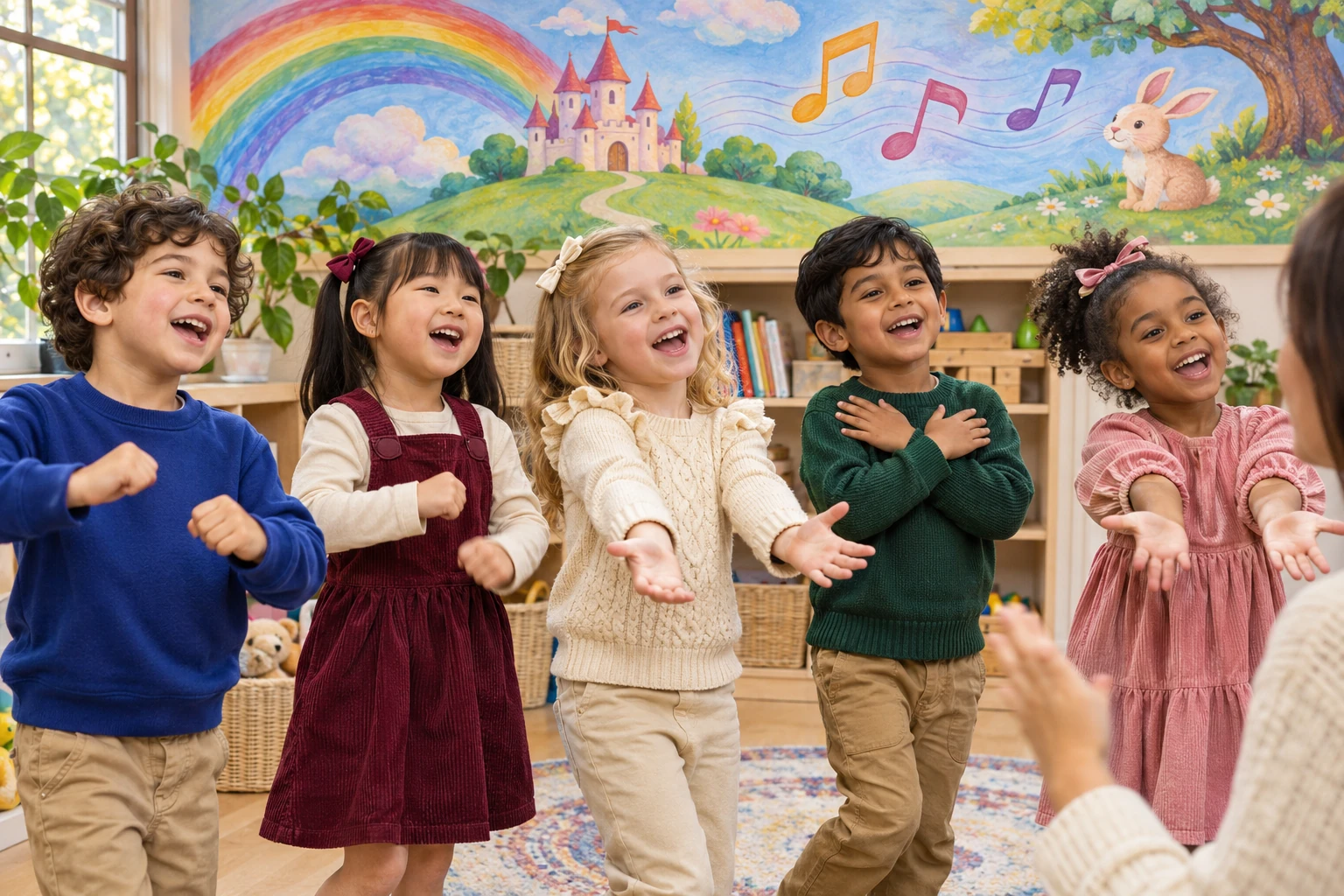
Beneath these enjoyable activities, five pathways are being built simultaneously.
- The auditory pathway A word enters as sound and takes its place in auditory memory.
- The visual pathway A word connects with an image and comes to mind as mental imagery.
- The movement pathway A word connects with action and is inscribed as embodied memory.
- The rhythm pathway A word rides on beat and melody, building an automated retrieval circuit.
- The story pathway A word comes alive in context and becomes part of a semantic network.
The core of Robust Vocabulary Instruction, established by American vocabulary researcher Isabel Beck and her colleagues, points to exactly this. Vocabulary does not grow through a single definition. Words become living vocabulary only when encountered deeply and repeatedly, in different contexts and different ways.
Children do not know what they are doing beneath the surface. They simply feel they are enjoying singing, moving, and looking at books. Yet beneath that enjoyment, five pathways for a single word are being built at the same time. A word whose five pathways come together is more than memorized information. It becomes a small, living world in a child’s mind.
From words to sentences, from sentences to stories
The vocabulary thinking skills OneBite develops do not stop at a single word. Starting from one word, children grow able to handle progressively larger units of meaning. At first, one word is a small world: Apple. That word becomes a short sentence: I like apples. The sentence becomes a scene: I share apples with my friend. The scene connects with another scene to form a story: Today my friend and I shared apples. We laughed together. This expansion is more than language growth. Cognitively, it is growth in the ability to handle increasingly larger units of information.
American cognitive psychologists Allan Collins and Elizabeth Loftus consistently demonstrated that human vocabulary is stored as a connected semantic network. Within a well-structured semantic network, activating one word awakens related words, which lead to still other words, allowing thought to grow progressively deeper and broader.

OneBite builds this pathway of expansion step by step: vocabulary → sentence → scene → story. Children appear to be learning words, but are actually developing the muscles of thought that handle information in increasingly larger units. This is why OneBite is both a vocabulary program and a thinking-skills program.
Vocabulary thinking as gifted language thinking
Gifted education is often mistaken for memorizing many difficult words. Yet truly gifted language thinking arises not from the number of words, but from their depth and connectedness.
OneBite helps children develop in the following ways.
A child who readily takes in a new word: a child who can naturally place it onto an already established semantic network.
A child who brings words to mind as images and scenes: a child with vocabulary alive as mental imagery rather than merely memorized recollections
A child who expands words into sentences: a child who begins with one word and creates their own expression.
A child who connects sentences into stories: a child who links expressions in sequence to build their own story.
A child who handles multisensory information integratively: a child who draws on sound, images, movement, and emotion at once to process one meaning in multiple dimensions.
These five abilities extend beyond English. The ability to take in new knowledge, structure information, and express it again in one’s own language underpins all learning. This is precisely why OneBite is both a vocabulary program and a program for gifted language thinking.
OneBite helps children build together the world within each word they encounter. That world contains color, sound, movement, and stories. When it grows sufficiently rich, sentences, scenes, and stories grow within it.