
ALTIORA's language development programs provide usage-based education in thinking and language, combining young children's general cognitive mechanisms with rich experiences of using constructions to help them organize and expand the meaning of the world through language. PlayTree develops a listening channel that discovers meaning intuitively through sound and context, while MighTree develops a speaking channel that extends expression by connecting internalized sentences and meanings. English serves here as a developmental tool that encourages thought and expression rather than as a goal of early study. Natural English fluency is understood as an outcome that follows accumulated rich experiences of use.
Young children first understand the world by listening, looking, touching, and moving. They then capture those experiences in language and use language to reorganize and expand the world's meaning. ALTIORA's language development programs are based on precisely this natural principle of early growth. By combining children's general cognitive mechanisms with rich experiences of using constructions, they help children organize and expand meaning through language. In doing so, they encourage the emergence of whole-child giftedness as thinking and expression grow together.
At ALTIORA, English is not the goal of early study. It is another language experience children use to listen, feel, respond, connect, and express. If the first language is the root of a child's thought and emotion, English is a tool for extending that thought and expression into a broader range of sounds, rhythms, stories, and situations. ALTIORA's curriculum structure likewise views English as a tool that enriches communication experiences rather than an independent learning goal, placing PlayTree and MighTree within the course of communication development.
This perspective is closely connected to Michael Tomasello's usage-based theory of language acquisition. Tomasello describes language acquisition not primarily as applying innate grammar rules, but as understanding the intentions and meanings of utterances in real communication events, discovering patterns in repeated expressions, and gradually extending specific utterances into flexible language structures. In particular, he regards the basic unit of children's language acquisition as the whole utterance rather than individual words, and sees early language as beginning with concrete usage experiences and item-based schema.
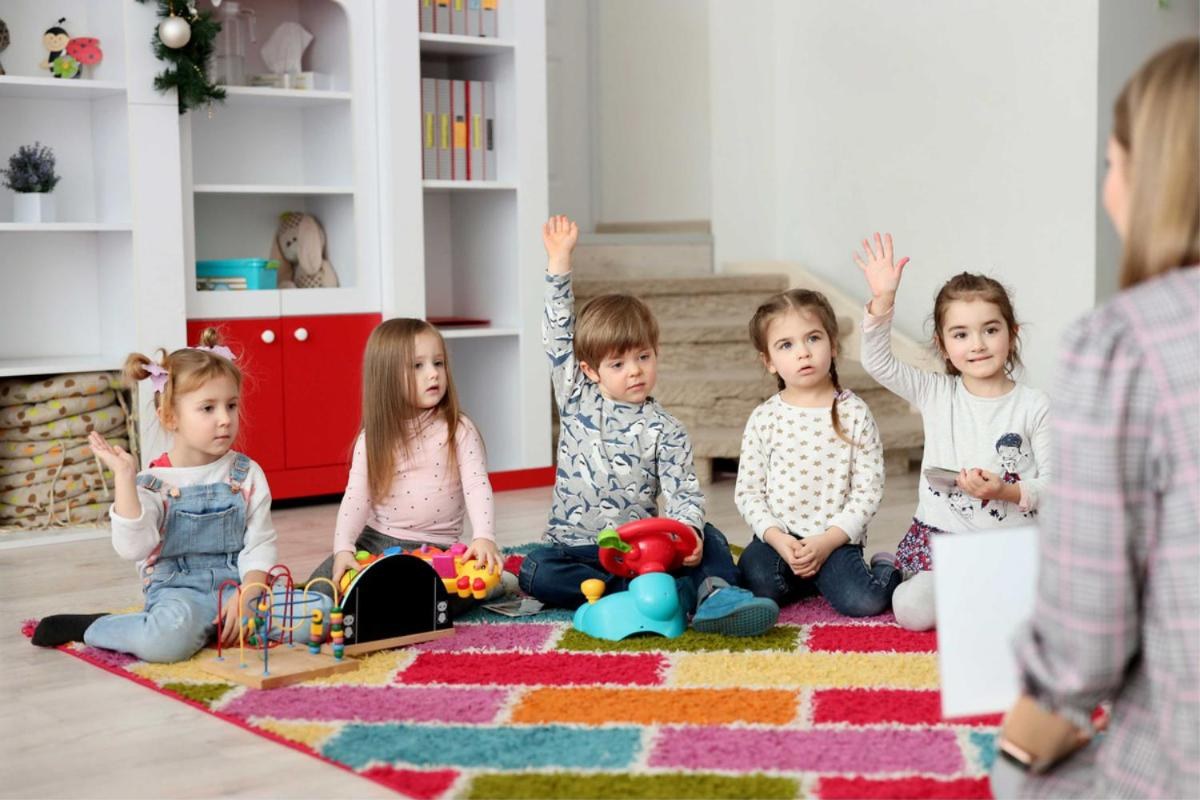
The starting point of ALTIORA's language education: Language is not a container for thought, but an activity that organizes meaning
ALTIORA's language education focuses less on “how quickly a child speaks English” than on “what the child hears through language, how the child understands it, what meanings the child connects, and how the child expresses them.” Language in early childhood is more than a means of conveying knowledge; it is a way of understanding the world. Through language, children learn not only the names of things but also organize relationships between things, actions and consequences, emotions and situations, and themselves and others.
In this respect, ALTIORA's PlayTree and MighTree are more than English listening and speaking programs. PlayTree is a listening-based meaning-inference program that helps children discover meaning by connecting English sounds with situations. MighTree is a meaning-connecting speaking program that helps children reconnect familiar sentences and meanings and extend them in speech. As the program introduction pages explain, PlayTree connects sound and meaning intuitively through songs, stories, and playful interaction, while MighTree meaningfully activates internalized sentences in speech on the listening foundation built by PlayTree.
This is precisely where Tomasello's theory connects with ALTIORA. In usage-based theory, language is not a system in which abstract rules are first learned and then applied, but a cognitive and social activity gradually structured through meaningful experiences of use. Tomasello identifies intention-reading and pattern-finding as the key cognitive abilities in language acquisition. Children first grasp the speaker's intention and the situation, discover structural patterns through repeated utterance experiences, and apply those patterns to new situations.
PlayTree: English listening inference is an intuitive thinking process that discovers meaning in sound
The core of PlayTree is not explaining English to children, but designing an environment in which they discover meaning in English sounds. Children listen to songs, watch teachers' gestures, follow friends' responses, and use pictures and the flow of stories to infer, “This is probably what it means.” This inference is closer to the intuitive understanding of context that is developmentally natural for young children than to the analytical reasoning used to solve logic problems.
Tomasello's intention-reading is an important concept for explaining this process. Children do not hear linguistic expressions alone; they also read the speaker's intention, the joint-attention situation, the direction of actions, and surrounding cues. A child who hears “Touch your nose!” in PlayTree and touches their nose is not translating words, but understanding sound and action, situation and intention together. This fits well with usage-based theory's view of language acquisition as a process of social interaction and understanding intentions.
PlayTree's songs, movements, stories, and picture materials also draw on children's multisensory experiences. This connects with grounded cognition research, which holds that cognition is not separate from the body, perception, action, and environment. Lawrence Barsalou explains that cognition is not solely the manipulation of abstract symbols but is deeply connected with perception, bodily states, and situated action. This developmental appropriateness is also why PlayTree uses listening to songs, responding with the body, and hearing stories through pictures and animation.
PlayTree is not a program for exposing children to large quantities of English words, but for intuitively organizing the world's meaning through the listening channel. Through English, children connect sounds and actions, scenes and meanings, and the flow of stories, developing listening comprehension. English fluency is not the immediate goal of this process but an outcome that grows naturally as rich experiences of listening and use accumulate.
MighTree: Meaning-connecting speaking extends thought by adding meaning to sentences
MighTree extends the listening foundation developed in PlayTree into the speaking channel. This speaking, however, is not simply repetition or presentation training. Its core lies in children internalizing familiar sentences and then reusing those sentences in new meanings and relationships.
This structure fits Tomasello's usage-based theory of language acquisition very well. Tomasello held that children do not manipulate abstract grammar rules from the outset, but begin with concrete utterance units and item-based schema, gradually creating more flexible structures. His account is that abstraction gradually emerges as children discover common patterns in repeated utterances and experience variation in the expressions that fill particular slots.
MighTree's “meaning-connecting speaking” can be seen as a curricular realization of this process. Children do not stop at memorizing a sentence. For example, they connect it with the body, emotions, actions, numbers, relationships, and story scenes, reusing a familiar sentence within a new network of meaning. Speaking then becomes more than linguistic output: it is a thinking activity that adds new meaning to what is already known and reorganizes the child's understanding of the world into sentences.
Related research also supports this design. Cameron-Faulkner, Lieven, and Tomasello analyzed how English-speaking mothers' child-directed speech contains utterance-level constructions and item-based frames, including recurring patterns such as “Are you…”, “It’s…”, and “Let’s…”. This supports the usage-based view that children encounter concrete sentence patterns in rich experiences of using constructions and acquire language structures through those patterns.
Construction grammar research by Goldberg and colleagues also shows that form–meaning correspondences, such as argument structure, can be learned through input and general categorization strategies. This explains how children can discover that “this structure carries this kind of meaning” through varied experiences of sentence use. It also aligns with why MighTree provides rich sentence-use experiences and extends those sentences into diverse relationships of meaning.
Integrating PlayTree and MighTree: Listening and speaking channels grow together
ALTIORA's language education does not regard listening and speaking as separate skills. Listening prepares for speaking, while speaking is the expressive stage in which meaning organized through listening becomes visible outwardly. In PlayTree, children discover meaning by connecting English sounds and context. In MighTree, they bring that meaning into sentences and speak while connecting it within new relationships. Their language use is therefore not a simple sequence of “input followed by output,” but a cycle in which meanings heard and understood expand again through speaking. PlayTree opens the listening channel; MighTree activates the speaking channel. Experiencing both programs gives children an integrated experience of listening, understanding, connecting, and expressing through English, rather than memorizing English as an object of study.
This structure also matters from the perspective of developmental appropriateness. NAEYC's Developmentally Appropriate Practice explains that approaches supporting young children's development and learning should be strengths-based, play-based, joyful, and engaging, and should support social, emotional, physical, and cognitive development as a whole. Korea's revised 2019 Nuri Curriculum likewise offers resources to help educators understand and practice a child- and play-centered curriculum. PlayTree and MighTree are in harmony with this direction because they let children experience English through songs, stories, movement, play, and picture-book contexts rather than treating it as a fragmented school subject.
Giftedness as ALTIORA understands it: The ability to understand and express the world more deeply through language
The giftedness ALTIORA pursues is not an ability reserved for a selected few. We define giftedness as “the potential within every child for thought and expression, brought into being through developmentally appropriate experiences and environments.” This definition connects naturally with usage-based language acquisition theory. Children's linguistic abilities develop not as isolated grammatical competence, but through general cognitive mechanisms, social interaction, meaningful usage experiences, and recurring experiences of constructions.
ALTIORA's English experiences should therefore not be reduced to “early English instruction intended to make children good at English.” At ALTIORA, English is a developmental medium that helps children hear the world anew, discover meaning, organize relationships, and express their thoughts. The fluency to listen and speak as naturally as in the first language may be an important outcome when this process has accumulated sufficiently, but it is not the entirety of our language education. Our deeper goal is to develop children's ability to understand the world, connect meanings, and express themselves in their own ways through language. This is how ALTIORA uses the experience of English to support the emergence of thinking, expression, and ultimately whole-child giftedness.